Skip to content
Single-Photon Detection · Waterloo, Canada

Detect every photon.
Unlock the quantum future.

Avalanche PhotoniQ engineers semiconductor metasurfaces that absorb light with near-perfect efficiency — delivering the high detection efficiency and picosecond timing resolution that quantum computing, communication, and sensing demand. All without cryogenic cooling.

Detection efficiency
Near unity
Timing resolution
7.7 ps
Operating temperature
Cryo-free
Form factor
Compact chip-scale
The photon problem

When every photon carries information, detection becomes the bottleneck.

In scalable photonic quantum computing, a single photon can encode the result of a computation. In quantum communication, each detected photon adds to the secure key rate. In quantum networks, missing one photon means a failed entanglement distribution between nodes.

Today's best detectors — superconducting nanowires — push the limits of performance but demand complex cryogenic infrastructure that stops them from leaving the lab. Conventional semiconductor detectors are portable, but trade away either detection efficiency or timing resolution.

Avalanche PhotoniQ closes the gap: the performance of superconducting detectors in a semiconductor form factor that runs at room temperature.

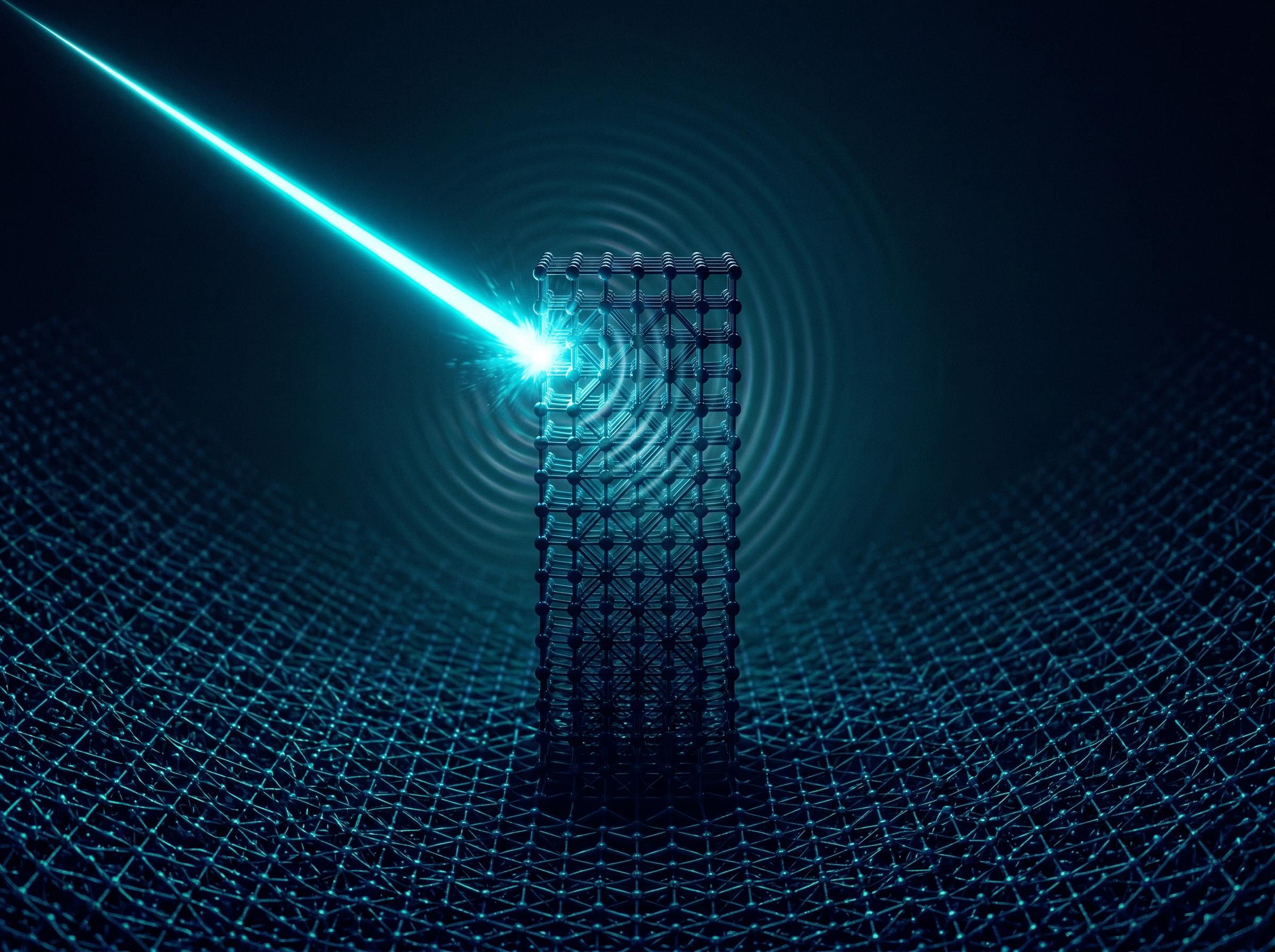
Visualization of a single photon being absorbed by a semiconductor metasurface nanostructure
The technology

A semiconductor metasurface, engineered photon by photon.

At the heart of our detectors is a carefully engineered metasurface — an array of nanostructures whose shape and geometry are tuned to absorb light with near-unity efficiency while controlling where that absorption happens.

Engineer the nanostructure

A semiconductor wafer is patterned into a precisely designed array of nanostructures — each pillar sized and shaped to interact with light at the subwavelength scale.

Absorb with near-unity efficiency

The metasurface geometry suppresses reflection and guides incident light into the active region. Virtually every incoming photon is absorbed — the probability of detection is dramatically improved.

Control where light lands

Beyond absorbing efficiently, the metasurface localizes absorption to a well-defined region. This tight control enhances timing resolution beyond the limits of conventional semiconductor detectors.

Trigger an avalanche

When a photon is absorbed, it initiates an avalanche of charge carriers through the semiconductor. The event is amplified into a crisp, measurable electrical pulse.

Run at room temperature

Because the detector is semiconductor-based, it needs no cryostats, no helium, no bulky infrastructure. The result: a compact, deployable module for the field, the lab, or orbit.

Integrate and scale

The architecture is compatible with standard semiconductor processing, opening a path to large-area arrays and monolithic integration with photonic circuits — key to scalable quantum systems.

Performance targets

Superconducting-class performance, semiconductor simplicity.

Detection efficiency
~100%

Near-unity absorption of incoming photons via engineered metasurface geometry.

Timing jitter
< 10ps

Controlled absorption location enables picosecond timing resolution.

Operating temperature
300K

Room-temperature operation — no cryogenics, no helium supply chain.

Footprint
Chip-scale

Compact modules ready for arrays, satellites, and photonic integration.

Where it matters

For every scenario where a single photon carries the answer.

From planetary-scale quantum networks to live-cell imaging, our detectors unlock measurements that were previously out of reach.

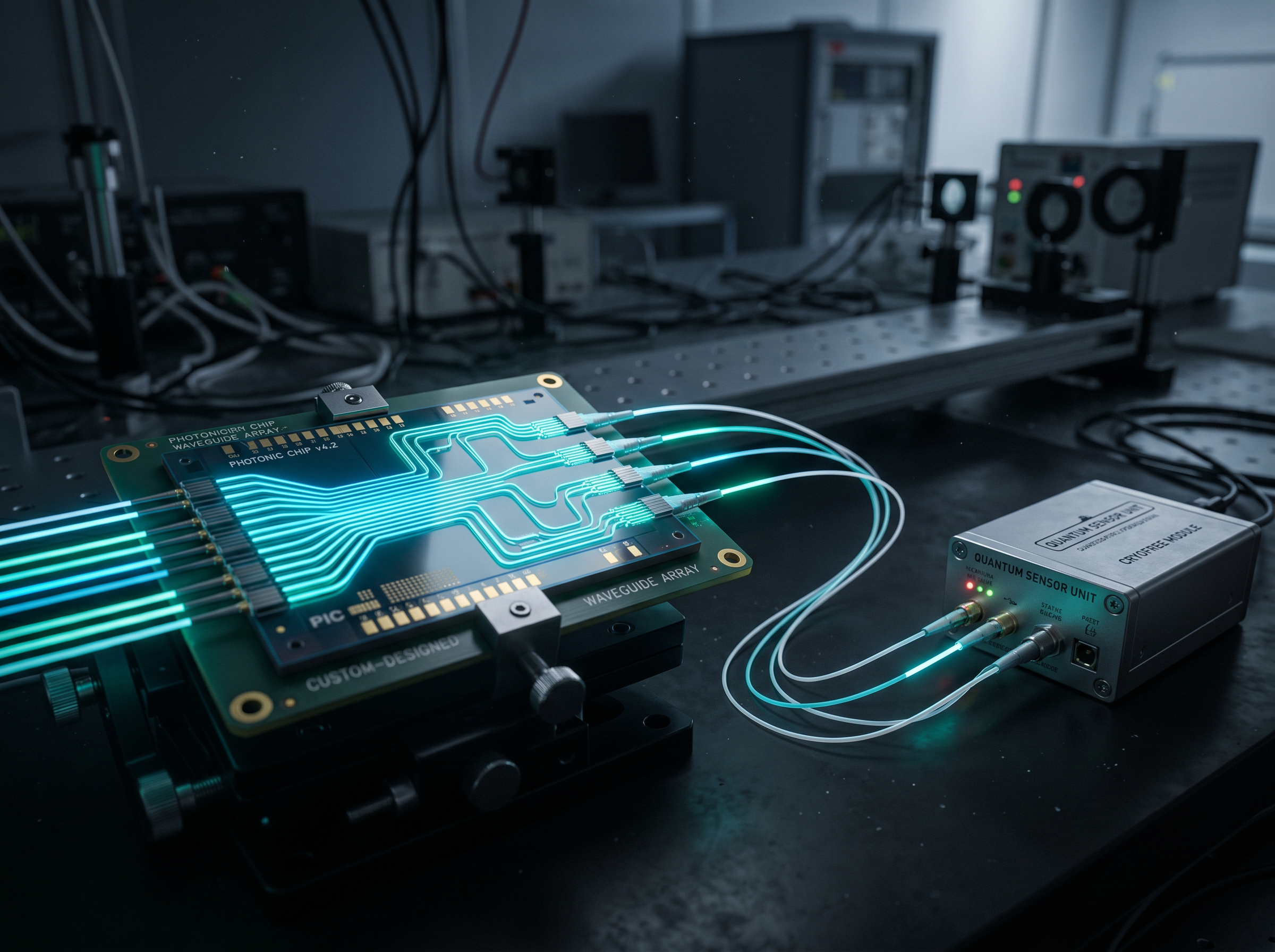
Photonic integrated chip with glowing waveguides connected to a room-temperature detector module
QUANTUM COMPUTING

Photonic qubit readout at scale

Scalable photonic quantum computers need thousands of high-efficiency detectors operating in parallel to reliably read out qubit states and computation results. Our semiconductor architecture removes the cryogenic bottleneck that limits today's systems.

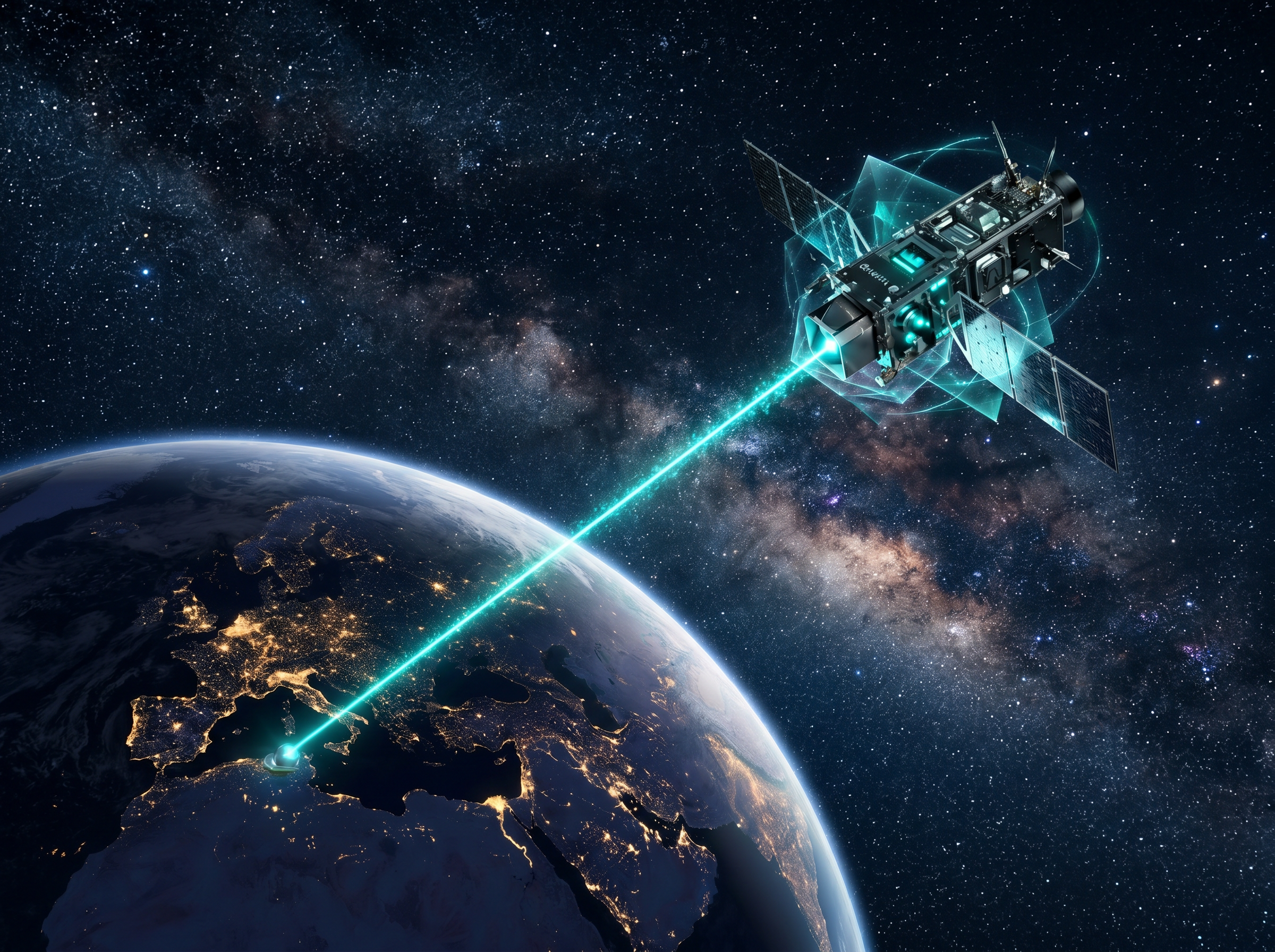
Satellite above Earth transmitting a cyan laser beam to a ground station for quantum communication
QUANTUM COMMUNICATION

Higher secure key rates, from ground and space

Every additional detected photon raises the secure key rate of a QKD link. Our detectors improve the efficiency budget of ground-based and satellite-based quantum communication without the mass and power cost of cryogenic coolers.

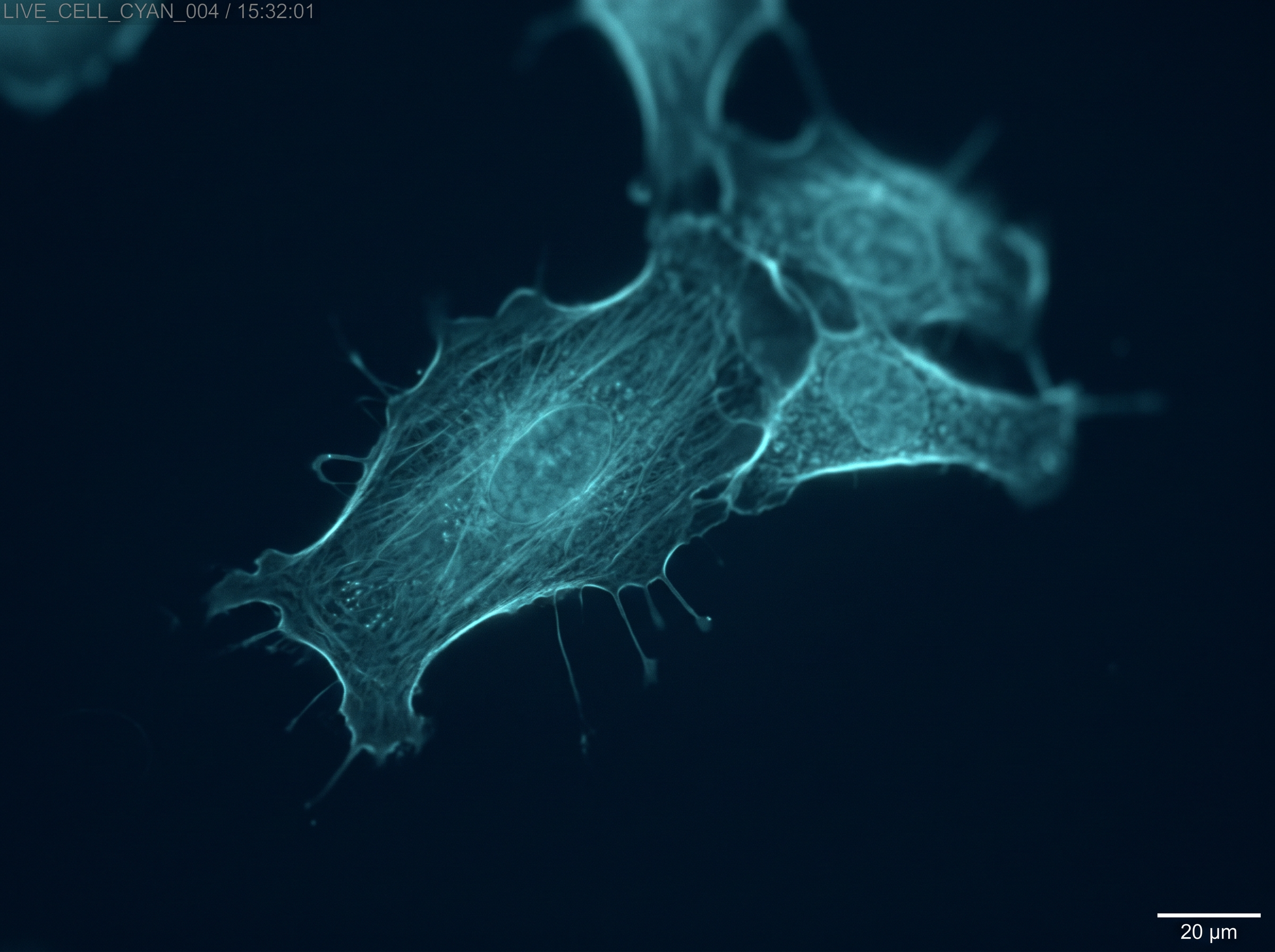
Microscopy image of live cells illuminated by extremely low-intensity light
BIOLOGICAL IMAGING

See what photon-starved samples are telling you

In fluorescence and deep-tissue imaging, the sample cannot tolerate bright illumination. A detector that registers almost every photon reaching it turns a faint biological signal into a usable image.

Abstract visualization of a photon being absorbed by a nanostructure lattice
QUANTUM NETWORKS & SENSING

Entanglement distribution, CMOS failure analysis, and quantum sensing

Precise single-photon detection confirms successful entanglement between remote nodes of a quantum network, pinpoints subtle faults in CMOS devices via photon-emission microscopy, and enables new sensing modalities in defence, aerospace, and scientific instrumentation.

Field signal

Photonics & optical computing, in motion.

The environment we're building for moves quickly. A running snapshot of the research, products, and funding shaping single-photon detection, photonic integration, and optical compute.

" "
" " Packaging " " " "
" "

NIST debuts photonic chip packaging for extreme environments

" "

Hydroxide-catalysis bonding enables robust fiber-to-PIC coupling across radiation, vacuum, and cryo cycling.

" "
NIST &middot; News
" " Read " "
" "
" " Optical AI " " " "
" "

Photonic chips enable real-time learning in spiking neural systems

" "

Programmable photonic neuromorphic hardware demonstrates fast all-optical learning and decision making.

" "
Optica &middot; News Releases
" " Read " "
" "
" " Detectors " " " "
" "

Fermilab study advances superconducting microwire single-photon detectors

" "

SMSPD sensors show improved particle detection efficiency and time resolution using thicker WSi films.

" "
Fermilab &middot; News
" " Read " "
" "
" " Silicon photonics " " " "
" "

Credo to acquire DustPhotonics to expand silicon photonics interconnects

" "

Deal aims to bring SiPho PIC tech in-house for 800G/1.6T/3.2T optical connectivity roadmaps.

" "
Credo Investor Relations &middot; Business Wire
" " Read " "
" "
" " SOH PIC " " " "
" "

NLM Photonics begins sampling 1.6T and 3.2T silicon-organic hybrid PICs

" "

Company says SOH PICs target 200Gb/s per lane with smaller footprint and lower drive voltage.

" "
NLM Photonics &middot; Company news
" " Read " "
" "
" " Metasurface " " " "
" "

Chaotic metasurface design packs multiple optical functions into one device

" "

Disordered mosaic metasurfaces demonstrate broadband lensing and polarization imaging in one surface.

" "
Phys.org &middot; Nature Communications
" " Read " "
" "
" " Integration " " " "
" "

OPN: NIST approach combines multiple materials for versatile photonic chips

" "

Technique patterns lithium niobate and tantala on silicon to enable flexible wavelength conversion.

" "
Optics & Photonics News &middot; Optica
" " Read " "
" "
" " Meta-optics " " " "
" "

Samsung and POSTECH publish metasurface lens for switchable 2D/3D displays

" "

Voltage-controlled metalens approach switches between 2D and 3D modes in a single device.

" "
Samsung Newsroom &middot; Research
" " Read " "
" "
" " Silicon photonics " " " "
" "

TrendForce: TSMC targets 2026 COUPE silicon photonics platform production

" "

Report says COUPE stacks electrical die atop photonic die to advance co-packaged optics integration.

" "
TrendForce &middot; News
" " Read " "
" "
" " CPO " " " "
" "

Report: co-packaged optics positioned as key AI data-center interconnect

" "

Market forecast outlines CPO roadmaps and standards scenarios for AI cluster bandwidth scaling.

" "
GlobeNewswire &middot; Press release
" " Read " "

Curated from open sources including ScienceDaily, optics.org, Laser Focus World, and Optics & Photonics News.

The founder

A decade of single-photon innovation, now in a company.

Pushing single photons from the lab to the market.

Dr. Michael Reimer has spent his career at the frontier of quantum photonics — developing the devices and detectors that make quantum information science practically deployable.

From 2009 to 2014, Reimer was a postdoctoral researcher at TU Delft in the quantum optics lab of Professor Val Zwiller, where he helped create solid-state quantum devices including bright single-photon and entangled-photon sources based on shaped nanowire heterostructures, and efficient nanowire avalanche photodiodes. In 2013 he was an integral part of Single Quantum, the Delft startup that commercialized superconducting-nanowire single-photon detectors now used by quantum labs worldwide.

In 2015 he joined the Institute for Quantum Computing at the University of Waterloo. His Quantum Photonic Devices Lab advances quantum repeaters, single-photon sources, and — the foundation of Avalanche PhotoniQ — a new class of highly efficient semiconductor metasurface single-photon detectors. In 2023 he won the Photons Canada / Photonics North Pitch Competition on the strength of this work.

Avalanche PhotoniQ is the vehicle to bring that research out of the lab: a compact, room-temperature single-photon detector platform built for the quantum era.

2000

BSc, Honours Physics (Co-op)

University of Waterloo.

2004

MSc, Engineering Physics

Technical University of Munich.

2010

PhD, Physics

University of Ottawa.

2009–2014

Postdoctoral researcher, TU Delft

Quantum optics group of Prof. Val Zwiller — nanowire single-photon and entangled-photon sources; nanowire avalanche photodiodes.

2013

Co-founding team, Single Quantum

Delft-based startup commercializing superconducting-nanowire single-photon detectors.

2015

Faculty, IQC & ECE — University of Waterloo

Founded the Quantum Photonic Devices Laboratory.

2020

7.7 ps time resolution detector published

Landmark result in ACS Photonics on efficient single-photon detection with 7.7 ps timing resolution for photon-correlation measurements.

2022

Promoted to Associate Professor

Institute for Quantum Computing and ECE, University of Waterloo.

2023

Winner, Photons Canada / Photonics North Pitch Competition

Recognition for the metasurface single-photon detector technology underlying Avalanche PhotoniQ.

Let's collaborate

Building quantum systems? We'd like to hear from you.

Whether you're deploying a quantum network, scaling a photonic quantum computer, or pushing the limits of low-light imaging, we're talking with partners and early customers.